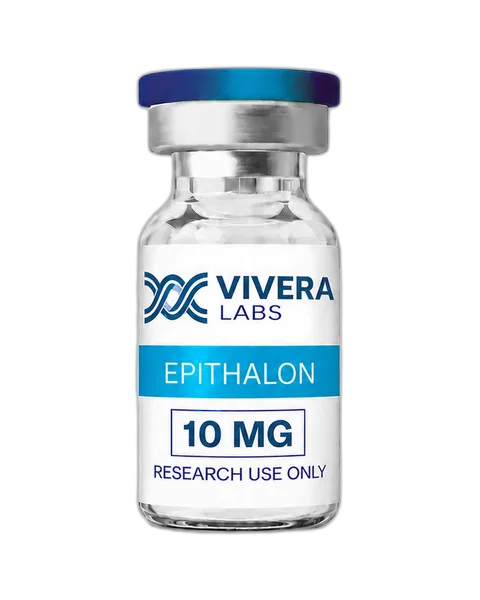
Epithalon Peptide (AEDG): Telomerase and Telomere Research
Epithalon (AEDG), the synthetic tetrapeptide Ala-Glu-Asp-Gly: what in-vitro and animal research examines about telomerase (hTERT) and telomere biology.
Epithalon (also written Epitalon) is a synthetic tetrapeptide with the amino-acid sequence Ala-Glu-Asp-Gly (AEDG). It was derived from the study of pineal-gland peptide extracts and is examined in the laboratory as a short, water-soluble model peptide.
Structure and identity
With only four residues, Epithalon is among the smallest peptides in common research use. Its simplicity makes identity confirmation by mass spectrometry straightforward, and it is supplied as a lyophilised (freeze-dried) powder for reconstitution under laboratory conditions.
What the research literature examines
Published in-vitro and animal studies — much of it associated with the work of Khavinson and colleagues — have examined Epithalon in the context of telomerase (hTERT) expression and telomere biology in cell-culture systems, as well as pineal-related signalling. This literature is exploratory. Vivera Labs makes no claims regarding effects in humans; the compound is supplied strictly for in-vitro laboratory research.
Why purity matters for this peptide
Short peptides can still carry synthesis-related impurities such as truncated sequences or residual counterions, which can confound sensitive assays. Each Vivera batch is independently analysed by a US-based third-party laboratory, with a Certificate of Analysis available on request.
Identity confirmed by mass spectrometry Purity quantified by HPLC Batch-specific documentation Lyophilised and cold-chain stored for stability Researchers are encouraged to consult the primary literature named in the references at the end of this article rather than rely on summaries.
Frequently Asked Questions What is Epithalon? Epithalon (also written Epitalon) is a synthetic tetrapeptide with the amino-acid sequence Ala-Glu-Asp-Gly (AEDG). It was derived from the study of pineal-gland peptide extracts and is examined in the laboratory as a short, water-soluble model peptide. It is supplied as a lyophilised powder for reconstitution under laboratory conditions.
What does the research literature examine about Epithalon and telomeres? Published in-vitro and animal studies, much of it associated with the work of Khavinson and colleagues, have examined Epithalon in the context of telomerase (hTERT) expression and telomere biology in cell-culture systems, as well as pineal-related signalling. This literature is exploratory. Vivera Labs makes no claims regarding effects in humans, and the compound is supplied strictly for in-vitro laboratory research.
Why is Epithalon’s identity easy to confirm? With only four residues, Epithalon is among the smallest peptides in common research use, and its simplicity makes identity confirmation by mass spectrometry straightforward. It is supplied as a lyophilised, freeze-dried powder for reconstitution under laboratory conditions.
Why does purity matter for a short peptide like Epithalon? Short peptides can still carry synthesis-related impurities such as truncated sequences or residual counterions, which can confound sensitive assays. Each Vivera batch is independently analysed by a US-based third-party laboratory, with identity confirmed by mass spectrometry and purity quantified by HPLC, and a Certificate of Analysis is available on request.
Related
Continue reading
For in-vitro laboratory research use only. Not for human or veterinary use, consumption, or therapeutic application. No medical claims are made.